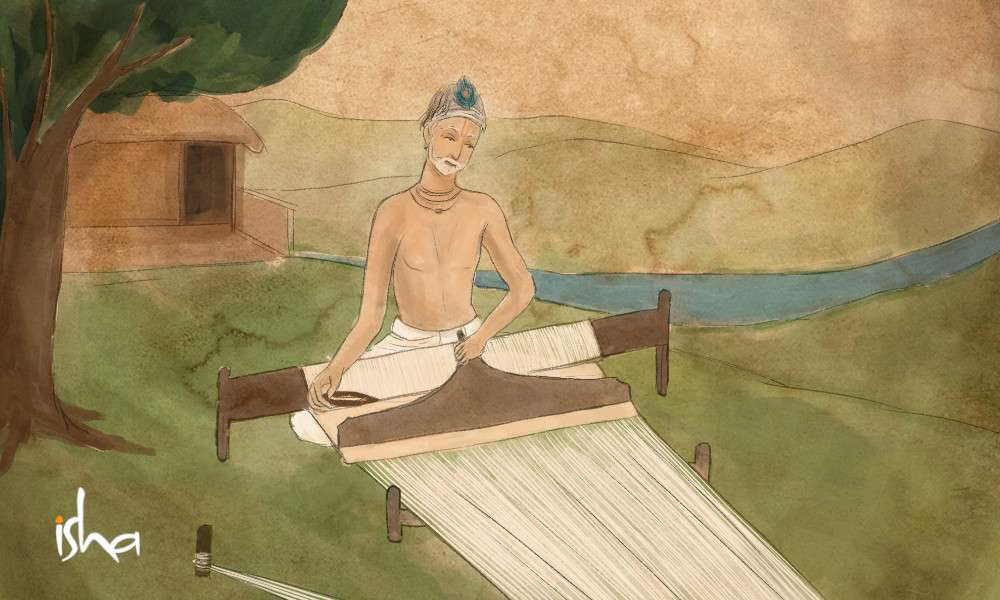
Beyond Ritual: The Essence of Direct Experience
In the profound words of Kabir, "Then I left off all rites and ceremonies, I bathed no more in the holy waters," we encounter a radical departure from the conventional practices that often define spirituality. Kabir's assertion invites us to reconsider the value of external rituals in favor of a more intimate, personal connection with the divine. This shift is not merely a rejection of tradition; it is an invitation to explore the depths of one's own heart and soul, where true spirituality resides. The stakes are high, as this journey towards direct experience can lead to profound transformation and understanding.
As we delve deeper into Kabir's declaration, we recognize that it challenges the very foundations of how we often perceive spirituality. In a world where rituals and ceremonies can sometimes become empty gestures, Kabir's words resonate with a call for authenticity and directness. He urges us to look beyond the surface, to seek the essence of our spiritual lives within ourselves rather than in the external trappings of faith. This exploration of interiority is not only relevant to Kabir's time but remains a vital inquiry for seekers today, as we navigate the complexities of our own spiritual journeys.
The image / the metaphor
At first glance, Kabir's statement evokes a vivid imagery of abandonment—of casting aside the familiar practices that have long been associated with holiness and purity. The act of bathing in holy waters, a metaphor for purification and renewal, is juxtaposed against the notion of leaving it behind. The verbs "left off" and "bathed no more" suggest a deliberate choice, a conscious decision to step away from the conventional and embrace a more profound understanding of spirituality. This imagery invites us to feel the weight of tradition and the liberating breath of freedom that comes with letting go.
Diving deeper into the metaphor, we can see that Kabir's rejection of rites and ceremonies is not an outright dismissal of their value but rather a critique of their potential to distract from genuine spiritual experience. The holy waters symbolize the external markers of faith that can sometimes obscure the inner journey. By stepping away from these rituals, Kabir encourages us to seek a more direct relationship with the divine, one that is unmediated by tradition. This metaphor serves as a powerful reminder that true spirituality often lies in the quiet spaces of our hearts, waiting to be discovered beyond the noise of external practices.
In the speaker's tradition
Kabir's teachings are deeply rooted in the bhakti tradition, which emphasizes personal devotion and direct experience of the divine. In this context, the concepts of dharma and bhakti become particularly relevant. Dharma, often understood as one's duty or path, can sometimes be conflated with ritualistic practices. However, Kabir's words remind us that true dharma is found in the authenticity of our inner experience rather than in the performance of prescribed rituals. This notion of kenosis, or self-emptying, resonates with Kabir's call to relinquish the external in favor of the internal.
Moreover, Kabir's emphasis on direct experience echoes the teachings found in other spiritual texts, such as the writings of the Sufi mystics who also sought a personal connection with the divine beyond the confines of ritual. For instance, Rumi speaks of the heart as the true temple, a place where the divine presence can be felt most acutely. In this light, Kabir's rejection of rites and ceremonies aligns with a broader spiritual quest for authenticity, urging seekers to cultivate an inner landscape where the divine can flourish.
Living the teaching
Consider a modern scenario where this teaching might resonate: a person attending a religious service out of obligation rather than genuine connection. They may find themselves going through the motions, participating in rituals without feeling their significance. Kabir's message serves as a gentle nudge to reflect on the authenticity of their spiritual practice. By stepping back and questioning the value of these external rites, they might discover a deeper yearning for a more personal relationship with the divine, one that transcends the confines of tradition.
In another context, this teaching can be applied to relationships. Imagine a couple who has fallen into a routine of performing gestures of love—gifts, dates, and words—without truly connecting on an emotional level. Kabir's call to leave off the ceremonial aspects of love can inspire them to seek a more genuine connection, one that prioritizes vulnerability and authenticity over mere performance. By focusing on the interiority of their relationship, they can cultivate a deeper bond that reflects the essence of love itself, rather than the rituals they feel obliged to uphold.
A reflection
As we contemplate Kabir's profound statement, we are invited to ask ourselves: What rituals or practices in my life may have become mere habits, devoid of true meaning? This question encourages a deep introspection, prompting us to examine the authenticity of our spiritual expressions. In a world that often prioritizes external validation, Kabir's wisdom beckons us to turn inward, to seek the divine in the quiet spaces of our hearts, and to embrace a spirituality that is both personal and transformative.



Join the BrightStar Community
Stay connected with daily inspiration, event announcements, and community wisdom