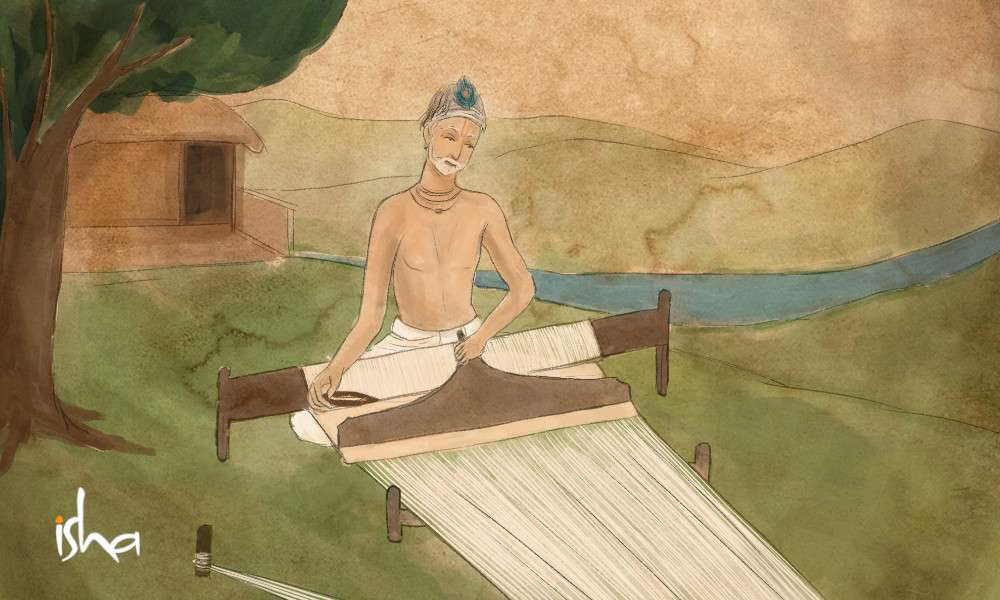
The Essence of Omnipresence: A Journey Through Kabir's Wisdom
In the profound words of Kabir, "He is the tree, the seed, and the germ. He is the flower, the fruit, and the shade," we encounter a rich tapestry of meaning that invites us to explore the nature of existence and the divine. This quote encapsulates the essence of omnipresence, suggesting that the divine is not merely a distant entity but is intricately woven into the very fabric of life itself. Understanding this interconnectedness is essential for those seeking a deeper relationship with the world and the divine, as it challenges us to recognize the sacred in every aspect of our existence.
As we delve deeper into Kabir's words, we find a call to awareness and presence. The imagery of the tree, seed, and fruit evokes a cycle of life that is both nurturing and sustaining. It reminds us that the divine is not only the source of life but also its sustenance and culmination. This holistic view encourages us to see beyond the surface of our experiences, urging us to recognize the divine essence that permeates all things, from the smallest seed to the grandest tree. In this way, Kabir invites us to cultivate a sense of reverence for the interconnectedness of all life.
The image / the metaphor
The imagery in Kabir's quote is striking and multifaceted. The tree symbolizes growth, stability, and shelter, while the seed represents potential and the beginning of life. The germ, often unseen, signifies the inner workings of life that lead to manifestation. Each element serves a purpose, illustrating the stages of existence and the divine's role in each phase. The verbs chosen—"is"—indicate a state of being that transcends time and space, suggesting that the divine essence is ever-present and active in our lives.
Delving deeper into the metaphor, we can see that the tree is not just a physical entity but a representation of the spiritual journey. The roots anchor us in the earth, while the branches reach toward the heavens, embodying the duality of our existence. The flower and fruit signify the beauty and bounty that arise from this journey, while the shade offers comfort and protection. This metaphor invites us to reflect on our own lives and consider how we embody these stages of growth, nurturing, and ultimately sharing our gifts with the world.
In the speaker's tradition
Kabir's wisdom is deeply rooted in the bhakti tradition, which emphasizes devotion and the personal relationship with the divine. Concepts such as dharma, or righteous living, and bhakti, the path of love and devotion, are central to understanding his teachings. The idea of kenosis, or self-emptying, resonates with the notion that to truly experience the divine, one must let go of the ego and embrace the interconnectedness of all beings. This aligns with the concept of sunyata, or emptiness, which suggests that true understanding comes from recognizing the impermanence of all things and the unity that lies beneath the surface.
In the context of Kabir's teachings, we can draw parallels to the writings of other mystics within the bhakti tradition. For instance, the verses of Mirabai echo similar sentiments, emphasizing the presence of the divine in every aspect of life. In her poetry, she often speaks of the beloved as an omnipresent force, much like Kabir's tree, seed, and fruit. This shared understanding of the divine's omnipresence invites us to explore our own relationship with the sacred and to recognize the divine in our daily lives.
Living the teaching
Consider a modern scenario where this teaching might resonate: a busy parent juggling work, family, and personal time. In the chaos of daily life, it can be easy to overlook the sacred moments that exist within the mundane. However, by embracing Kabir's wisdom, one can begin to see the divine in the simple act of nurturing a child, the patience required in a difficult conversation, or the beauty of a shared meal. Each of these moments becomes an opportunity to connect with the essence of life, recognizing that the divine is present in every interaction.
Another application of this teaching might arise in the context of a challenging relationship. When faced with conflict, it is easy to become entrenched in our perspectives, forgetting the interconnectedness that Kabir emphasizes. By approaching the situation with the awareness that both parties are expressions of the same divine essence, we can cultivate empathy and understanding. This shift in perspective allows us to navigate difficulties with grace, recognizing that even in discord, there is an opportunity for growth and connection.
A reflection
As we contemplate Kabir's profound statement, we are invited to ask ourselves: How can I recognize the divine presence in the everyday moments of my life? This question encourages us to cultivate mindfulness and awareness, allowing us to see beyond the surface and appreciate the sacredness of our experiences. By reflecting on this inquiry, we can deepen our understanding of our relationship with the divine and the world around us, fostering a sense of gratitude and connection that enriches our spiritual journey.




Join the BrightStar Community
Stay connected with daily inspiration, event announcements, and community wisdom