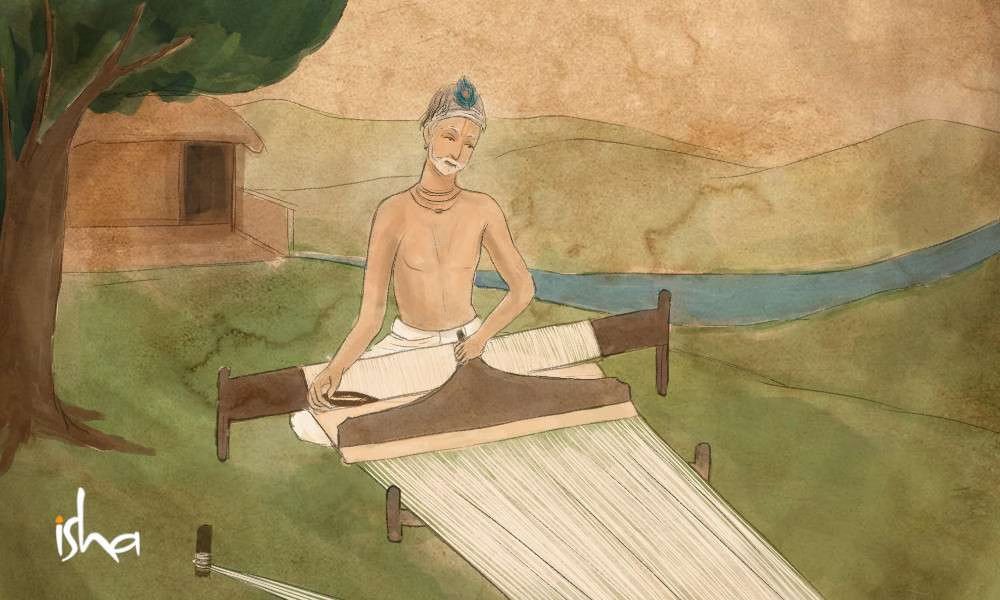
The Dance of Union: Understanding Kabir's Profound Insight
In the evocative words of Kabir, "To dance without feet — that is the meeting of Brahma and the Atma." This striking metaphor invites us to contemplate the essence of union between the divine and the individual soul. It suggests a profound state of being where the limitations of the physical world dissolve, allowing for a deeper connection to the universal spirit. This teaching resonates with seekers who yearn for a transcendent experience, reminding us that true communion with the divine transcends the material constraints of our existence.
As we delve into this quote, we uncover layers of meaning that speak to the heart of spiritual practice. The imagery of dancing without feet evokes a sense of freedom and fluidity, suggesting that the dance of life is not confined to physicality but is instead an expression of the soul's innate joy. Kabir, a luminary of the bhakti tradition, invites us to explore the subtleties of our existence, encouraging us to seek the divine within ourselves and recognize the interconnectedness of all beings. This exploration is not merely an intellectual exercise; it is a call to embody the dance of union in our daily lives.
The image / the metaphor
The phrase "dance without feet" conjures a vivid image of movement that is unbound by the physical limitations of the body. It suggests a state of being where the spirit expresses itself freely, transcending the need for a physical form to engage in the act of dancing. The choice of the word "dance" is particularly significant, as it implies joy, rhythm, and a dynamic interplay between the self and the cosmos. In this context, the dance becomes a metaphor for the soul's journey towards unity with Brahma, the ultimate reality, and Atma, the individual self.
Diving deeper into this metaphor, we can see that the dance represents the fluid nature of existence itself. Just as a dancer moves gracefully, responding to the music of life, so too must we learn to navigate the complexities of our spiritual journey. The absence of feet signifies that this dance is not about physical prowess or achievement; rather, it is about surrendering to the divine flow and allowing ourselves to be guided by a higher power. In this way, Kabir invites us to embrace the subtleties of our spiritual path, recognizing that true union with the divine is found in the spaces between our thoughts, actions, and desires.
In the speaker's tradition
Kabir's teachings are deeply rooted in the bhakti tradition, which emphasizes devotion and love for the divine as the path to spiritual realization. Central to this tradition is the concept of bhakti itself, which encourages a personal and intimate relationship with God. In this context, the dance without feet symbolizes the surrender of the ego and the merging of the individual soul with the universal spirit. This union, often referred to as "fana" in Sufi thought, echoes the idea of self-annihilation in the presence of the divine, where the boundaries of the self dissolve into the greater whole.
Moreover, Kabir's insights resonate with the Buddhist concept of "sunyata," or emptiness, which suggests that the self is not a fixed entity but rather a fluid interplay of experiences and perceptions. Just as the dance without feet implies a release from the constraints of the physical body, so too does the understanding of sunyata invite us to let go of our attachments and recognize the interconnectedness of all beings. In his poetry, Kabir often draws upon these themes, urging us to look beyond the surface of our existence and embrace the deeper truths that lie within.
Living the teaching
Consider a modern scenario where this teaching might resonate: a busy professional caught in the relentless grind of daily life. In the pursuit of success, they may feel disconnected from their true self, their passions overshadowed by obligations. By embracing the idea of dancing without feet, this individual can begin to shift their perspective, recognizing that fulfillment does not solely arise from external achievements but from an inner alignment with their authentic self. This shift allows them to find joy in the present moment, even amidst the chaos of their responsibilities.
In relationships, the teaching of Kabir can also find profound application. Imagine a couple navigating a challenging period, where misunderstandings and conflicts seem to dominate their interactions. By embodying the essence of the dance without feet, they can learn to approach their relationship with a sense of openness and vulnerability. Instead of clinging to their individual perspectives, they can cultivate a shared space of understanding, allowing their love to flourish in the dance of union. This practice of surrendering to the flow of their connection can transform their relationship into a sacred dance, where both partners feel seen, heard, and cherished.
A reflection
As we reflect on Kabir's poignant words, we are invited to consider the nature of our own dance with the divine. Are we allowing ourselves to move freely in the rhythm of life, or are we constrained by our fears and attachments? In what ways can we embody the dance without feet, surrendering to the flow of existence and embracing the union of our individual selves with the greater whole? Let this contemplation guide us as we seek to deepen our connection with the divine and with one another.



Join the BrightStar Community
Stay connected with daily inspiration, event announcements, and community wisdom