Embracing the Divine in Every Being
In the profound words of Kabir, "All the men and women of the world are His living forms," we are invited to contemplate the essence of divinity manifesting through humanity. This statement serves as a powerful reminder of the interconnectedness of all beings, urging us to recognize the divine presence that resides within each individual. In a world often marked by division and separation, Kabir's insight beckons us to transcend our differences and embrace a shared spiritual identity, fostering compassion and unity among all people.
To delve deeper into this teaching, we must consider the implications of recognizing every person as a living embodiment of the divine. This perspective challenges us to shift our focus from the superficial distinctions that often divide us—such as race, gender, and belief systems—to a more profound understanding of our shared humanity. By acknowledging that each individual reflects the divine essence, we cultivate a sense of reverence and respect for all life, fostering a community rooted in love and understanding.
The image / the metaphor
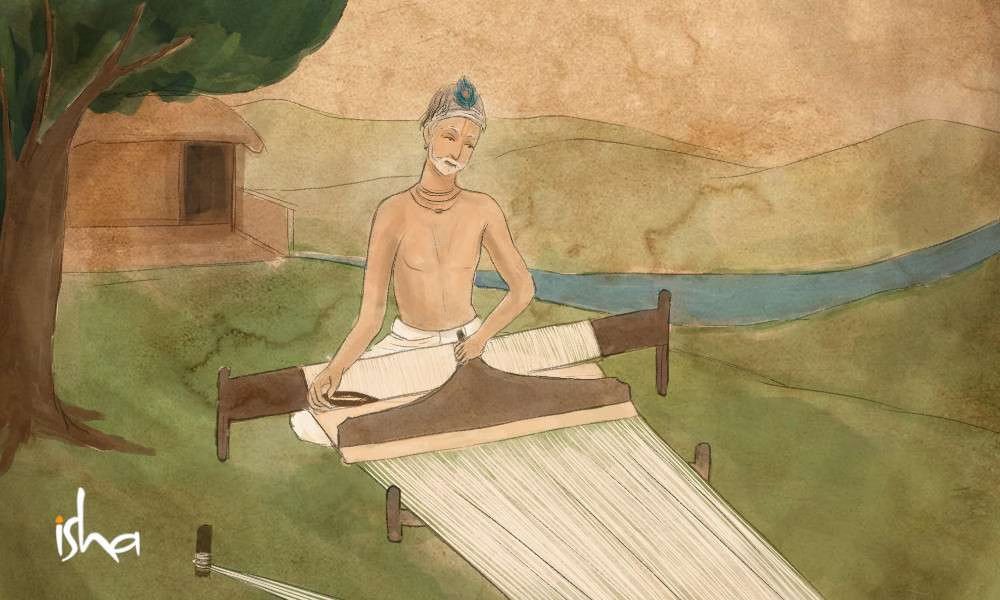
The imagery in Kabir's quote evokes a vivid picture of humanity as a tapestry woven from the threads of divine essence. The phrase "living forms" suggests that each person is not merely a vessel but a dynamic expression of the divine, pulsating with life and spirit. This choice of words emphasizes the vibrancy and immediacy of our existence, inviting us to see beyond the physical and recognize the sacredness inherent in every encounter.
Diving deeper into the metaphor, we can interpret "His living forms" as an invitation to perceive the divine in the mundane. Each interaction we have with others becomes an opportunity to encounter the divine presence, urging us to approach our relationships with mindfulness and reverence. This perspective transforms our understanding of community and connection, suggesting that every person we meet is a reflection of the divine, deserving of our love and compassion.
In the speaker's tradition
Kabir's teachings emerge from the rich tradition of bhakti, a devotional path that emphasizes love and devotion to the divine. Central to this tradition is the concept of unity, where the individual soul (atman) recognizes its oneness with the universal spirit (Brahman). This realization aligns with the idea of kenosis, or self-emptying, where one surrenders the ego to experience a deeper connection with the divine presence in others. In this light, Kabir's assertion becomes a call to dissolve the boundaries that separate us, fostering a sense of collective identity rooted in the divine.
Moreover, Kabir's insights resonate with the Buddhist concept of sunyata, or emptiness, which teaches that all phenomena are interconnected and devoid of inherent separation. Just as sunyata invites us to see beyond the illusion of individuality, Kabir's words encourage us to recognize the divine essence that permeates all beings. In this way, both traditions converge on the understanding that true liberation arises from recognizing our shared existence and the divine spark within each person.
Living the teaching
Consider a modern scenario where this teaching can be applied: a bustling city street filled with diverse individuals, each carrying their own stories, struggles, and joys. In such a setting, it is easy to overlook the humanity of those around us, reducing them to mere passersby. However, if we embrace Kabir's perspective, we can choose to see each person as a living form of the divine, prompting us to approach them with kindness and empathy. This shift in perception can transform our daily interactions, fostering a sense of community and connection even in the most ordinary moments.
In a more personal context, imagine navigating a difficult relationship with a family member or friend. The tensions and misunderstandings may cloud our ability to see the divine essence in the other. Yet, by consciously reminding ourselves of Kabir's teaching, we can cultivate compassion and patience, recognizing that beneath the surface of conflict lies a shared humanity. This practice not only deepens our relationships but also nurtures our own spiritual growth, as we learn to embody love and understanding in the face of adversity.
A reflection
As we reflect on Kabir's profound assertion, we are invited to consider the ways in which we perceive and interact with others. How might our lives change if we consciously recognized the divine presence in every person we encounter? This contemplative question encourages us to explore the depths of our connections, fostering a greater sense of unity and compassion in our daily lives. In embracing this teaching, we embark on a journey toward a more harmonious existence, rooted in the understanding that we are all expressions of the same divine source.




Join the BrightStar Community
Stay connected with daily inspiration, event announcements, and community wisdom